

Telefono:+86-0572-2926332 / 2926337

E-mail:[email protected]
 RICHIEDI UN PREVENTIVO

 it
it  简体中文
简体中文What Makes Silicon Nitride Ceramics So Tough — And Where They're Actually Used
2026.06.10
What Silicon Nitride Ceramics Actually Are
Silicon nitride ceramics are a family of advanced engineering materials made from silicon and nitrogen — two of the most abundant elements on Earth. The chemical compound, Si₃N₄, forms a covalently bonded structure that gives these ceramics a unique combination of properties that neither metals nor conventional oxide ceramics can match. Unlike traditional ceramics such as alumina or zirconia, silicon nitride has a microstructure dominated by elongated, interlocking grains that behave more like reinforcing fibers within the material, which is a key reason it's so much tougher and more resistant to cracking.
There are three main crystalline phases of silicon nitride: alpha (α-Si₃N₄), beta (β-Si₃N₄), and gamma (γ-Si₃N₄). In practical manufacturing, the alpha phase is the starting powder used in sintering, and it transforms into the stronger, needle-like beta phase during the densification process. The resulting microstructure — with long, interlocked beta grains — is what gives sintered silicon nitride components their impressive mechanical performance. Gamma-Si₃N₄ forms only under extremely high pressures and has limited industrial use.
The Key Properties That Set Silicon Nitride Apart
To understand why silicon nitride ceramic components are chosen over metals or other advanced ceramics, it helps to look at the numbers. The combination of properties is genuinely unusual — high strength, low weight, thermal resistance, and electrical insulation rarely come together in a single material.
| Property | Silicon Nitride (Si₃N₄) | Alumina (Al₂O₃) | Steel (Stainless) |
| Density (g/cm³) | 3.2 | 3.9 | 7.9 |
| Flexural Strength (MPa) | 700 – 1,000 | 300 – 400 | 500 – 800 |
| Fracture Toughness (MPa·m½) | 5 – 8 | 3 – 4 | 50 – 100 |
| Max Use Temp (°C) | ~1,200 | ~1,600 | ~800 |
| Thermal Shock Resistance | Excellent | Poor | Good |
| Electrical Insulation | Excellent | Excellent | None |
What stands out immediately is the combination of low density and high flexural strength. Silicon nitride ceramic parts weigh roughly 40% of an equivalent steel component, yet they can match or exceed steel in terms of stiffness and bending resistance. Add in the material's low coefficient of thermal expansion — typically around 3 × 10⁻⁶/°C — and you get a material that expands very little with heat, reducing the risk of thermal fatigue cracking in cyclic temperature environments. Thermal shock resistance, which is catastrophically poor in most ceramics, is genuinely good in silicon nitride due to this low expansion combined with moderately high thermal conductivity.
How Silicon Nitride Ceramic Components Are Made
Manufacturing silicon nitride ceramics is considerably more involved than processing metals or even oxide ceramics. The covalent bonding that makes Si₃N₄ so strong also makes it extremely difficult to sinter — the particles resist bonding together under heat alone. Several specialized densification methods have been developed to address this.
Reaction Bonded Silicon Nitride (RBSN)
In the reaction bonding process, silicon powder is shaped into the desired form and then fired in a nitrogen atmosphere. The silicon reacts with nitrogen gas to form Si₃N₄ directly within the part. The dimensional change during firing is near zero, making RBSN attractive for complex net-shape components that require minimal machining. The drawback is residual porosity — RBSN parts are typically 10–20% porous, which limits their strength and makes them unsuitable for applications requiring maximum mechanical performance.
Hot Pressed Silicon Nitride (HPSN)
Hot pressing applies simultaneous heat (around 1,700–1,800°C) and uniaxial pressure to silicon nitride powder mixed with sintering aids such as magnesia (MgO) or yttria (Y₂O₃). The result is a near-fully dense material with excellent mechanical properties. However, the uniaxial pressure limits part geometry to simple shapes like discs and blocks, and the process is expensive at scale. Hot pressed silicon nitride is still used where absolute maximum strength is needed and geometry is not complex.
Gas Pressure Sintering (GPS) and HIP
Gas pressure sintering uses nitrogen gas at elevated pressure (5–10 MPa) along with sintering aids to achieve near-full density in more complex part geometries. Hot isostatic pressing (HIP) applies isostatic pressure from all directions, enabling even better densification of complex shapes. GPS and HIP-sintered silicon nitride materials offer the best balance of geometry flexibility and high mechanical performance, and they are the dominant manufacturing routes for precision silicon nitride ceramic balls, bearing races, and structural components used in industry today.
Where Silicon Nitride Ceramics Are Used in the Real World
The properties of Si₃N₄ ceramics are not theoretical talking points — they translate into concrete performance advantages across a wide range of demanding industries. Here's where silicon nitride ceramic materials are actively deployed and why.
Bearing Balls and Precision Rolling Elements
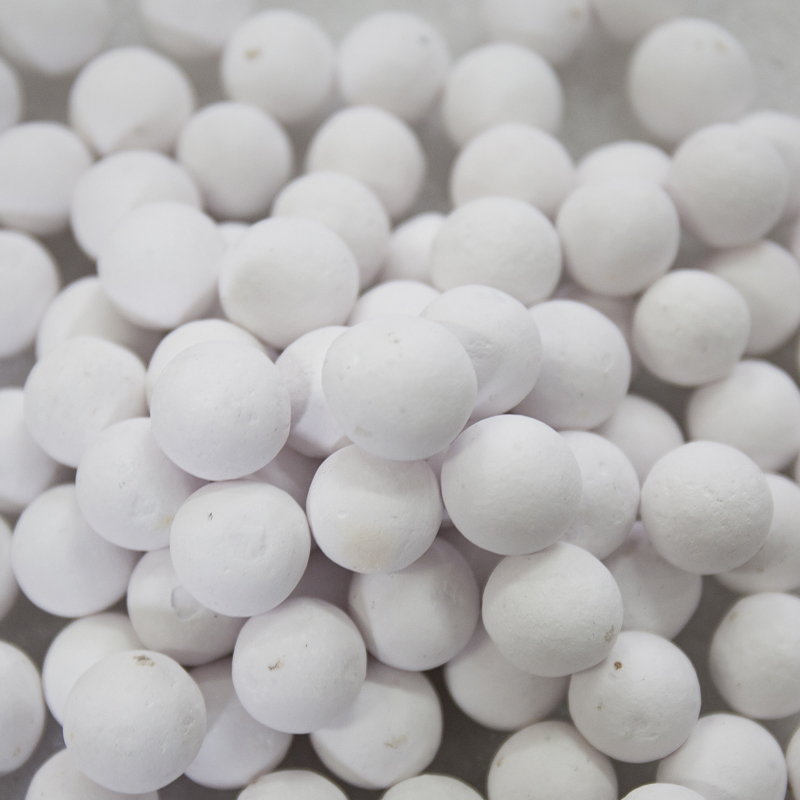
Silicon nitride ceramic bearing balls are arguably the most commercially widespread application of this material. Compared to steel bearing balls, Si₃N₄ balls are 60% lighter, run cooler due to lower heat generation from friction, and are significantly harder (Vickers hardness of ~1,500 HV versus ~700 HV for bearing steel). They are non-magnetic and resistant to corrosion, making them ideal for high-speed spindles in CNC machine tools, dental handpieces, vacuum environments, and corrosive chemical processing equipment. Hybrid bearings — combining silicon nitride balls with steel races — have become standard in high-performance applications ranging from electric vehicle motors to aerospace turbines.
Aerospace and Gas Turbine Components
The aerospace industry has long been interested in silicon nitride for hot-section turbine components. Replacing nickel superalloy turbine blades and vanes with silicon nitride ceramic parts offers theoretical weight savings of over 50% and eliminates the need for cooling air passages — because Si₃N₄ can withstand operating temperatures that superalloys require active cooling to survive. While broad adoption in main combustion turbines is still being pursued due to reliability requirements, silicon nitride is already used in turbocharger rotors, where its low inertia means faster spool-up response and dramatically improved turbo lag compared to metal rotors. Major automotive manufacturers in Europe and Japan have used Si₃N₄ turbocharger rotors in production vehicles.
Medical Implants and Spinal Fusion Devices
Silicon nitride has emerged as a compelling material for orthopedic and spinal implants. Unlike PEEK (polyether ether ketone) — the dominant polymer used in spinal fusion cages — silicon nitride is radiolucent in specific imaging modalities, bacteriostatic (it inhibits bacterial colonization), and has demonstrated superior bone-on-growth characteristics in clinical studies. The surface chemistry of Si₃N₄ in a physiological environment releases trace amounts of silicic acid, which has been shown to promote osteoblast activity and bone regeneration. Companies such as Amedisys and Sintx Technologies have received FDA clearance for silicon nitride spinal implants, and clinical outcomes data is building a strong case for broader adoption.
Cutting Tools and Wear Parts
Silicon nitride ceramic cutting inserts are used for high-speed machining of cast iron, nickel-based superalloys, and hardened steel. They outperform conventional cemented carbide inserts in these applications because they maintain their hardness and cutting edge integrity at the extreme temperatures generated during high-speed cutting. Si₃N₄ inserts are particularly effective in face milling of gray cast iron at speeds above 500 m/min, where carbide tools would rapidly wear. The same hardness and wear resistance properties make silicon nitride attractive for valve seats, pump components, nozzles, and other wear-intensive parts in abrasive or corrosive process environments.
Electronics and Semiconductor Equipment
In the electronics industry, silicon nitride thin films are widely used as dielectric layers, diffusion barriers, and passivation coatings in semiconductor devices — this is a related but distinct use from bulk Si₃N₄ ceramics. In terms of structural ceramic applications, silicon nitride substrates are used as circuit board substrates for high-power electronics because of their combination of high electrical insulation, high thermal conductivity (up to 90 W/m·K in some grades), and excellent thermal shock resistance. These properties make Si₃N₄ substrates superior to alumina in power modules for EV inverters and industrial power electronics, where thermal cycling is severe.
Grades of Silicon Nitride Ceramics and How They Differ
Not all silicon nitride ceramic materials perform identically. The choice of sintering aids, manufacturing process, and microstructural engineering leads to distinct grades optimized for different end uses. Understanding these grades helps engineers select the right material for a given application.
- Standard GPS grades: The most widely available form of dense silicon nitride, using yttria and alumina as sintering aids. These offer a well-balanced combination of strength (~700–800 MPa flexural), toughness, and thermal resistance suited to bearings, cutting tools, and structural parts.
- High-thermal-conductivity grades: Engineered with magnesium silicate or rare earth sintering aids and specialized processing to maximize thermal conductivity — reaching 80–90 W/m·K. Used primarily in power electronics substrates and heat spreaders where thermal management is the primary design driver.
- High-purity medical grades: Manufactured to exacting purity standards with controlled grain boundary chemistry for biocompatibility and consistent surface behavior in physiological environments. These grades undergo extensive biocompatibility testing per ISO 10993 standards before use in implants.
- SiAlON grades: A sub-family of silicon nitride ceramics where aluminum and oxygen partially substitute for silicon and nitrogen in the crystal lattice, forming silicon aluminum oxynitride (SiAlON). These grades offer improved oxidation resistance at very high temperatures and are commonly used in cutting tool inserts for nickel superalloy machining.
- Reaction bonded grades (RBSN): Net-shape formability makes these attractive for large or complex parts where finish machining of a dense ceramic would be prohibitively expensive. The lower density and strength compared to GPS grades must be factored into the design.
Machining and Finishing Silicon Nitride Ceramic Parts
Because silicon nitride is so hard — typically 14–16 GPa on the Vickers scale — it cannot be machined using conventional metal-cutting tools. All precision shaping of dense Si₃N₄ ceramics must be done by diamond grinding, which is slow, expensive, and requires careful process control to avoid introducing surface damage that could act as stress concentrations and reduce part reliability.
This is why near-net-shape forming is critical in silicon nitride ceramic manufacturing. Techniques such as injection molding, slip casting, gel casting, and dry pressing are used to form green (unfired) parts as close to the final geometry as possible, minimizing the amount of diamond grinding needed after sintering. For extremely tight-tolerance components like bearing balls, lapping and polishing with diamond abrasives after sintering brings surfaces to the sub-micron finish levels required for precision rolling contact applications. The total cost of machining often represents the majority of the finished part cost for silicon nitride ceramics — a key consideration when evaluating whether the performance benefits justify the investment.
Silicon Nitride vs. Other Advanced Ceramics
Engineers selecting advanced ceramics for a structural application typically compare silicon nitride against a short list of competitors. Each material has distinct strengths and weaknesses, and the right choice depends heavily on the specific loading conditions, temperature range, and environment.
| Material | Strength | Toughness | Thermal Shock | Cost | Best Use |
| Silicon Nitride (Si₃N₄) | Very High | High | Excellent | High | Bearings, turbines, implants |
| Alumina (Al₂O₃) | Moderate | Low | Poor | Low | Electrical insulation, wear liners |
| Zirconia (ZrO₂) | High | Very High | Moderate | Moderate | Dental, structural at moderate temps |
| Silicon Carbide (SiC) | High | Moderate | Good | High | Very high temps, oxidizing environments |
| Boron Carbide (B₄C) | Very High | Low | Poor | Very High | Armor, abrasive applications |
Silicon carbide is often compared directly to silicon nitride for high-temperature structural applications. SiC has better oxidation resistance above 1,200°C and higher thermal conductivity, but its lower fracture toughness and poor thermal shock resistance make it more prone to catastrophic failure under sudden temperature changes. For applications involving cyclic thermal loading or mechanical impact, silicon nitride ceramics are generally the safer choice. Zirconia, while tougher than most ceramics due to its transformation toughening mechanism, loses strength rapidly above 900°C — making it unsuitable for high-temperature applications where Si₃N₄ continues to perform reliably.
Challenges and Limitations of Silicon Nitride Ceramics
For all their advantages, silicon nitride ceramics come with real limitations that engineers must plan around rather than ignore.
- Brittleness under tensile loading: Like all ceramics, Si₃N₄ has essentially zero ductility. Under tensile stress, it fails without any plastic deformation or warning. Design approaches such as compressive pre-stressing, conservative safety factors, and statistical reliability analysis (Weibull modulus) are required to use ceramic components safely in structural applications.
- High manufacturing and machining costs: The combination of specialized sintering equipment, long firing cycles, and diamond-only machining makes silicon nitride parts significantly more expensive than equivalent metal components. This cost premium is only justified when the performance benefits are substantial enough to outweigh it over the part's service life.
- Limited repairability: Damaged silicon nitride parts generally cannot be repaired and must be replaced. Unlike metals, welding, brazing, or re-machining of cracked ceramic components is rarely practical. This makes initial design quality and non-destructive inspection critical.
- Oxidation above 1,200°C in air: While silicon nitride is stable up to around 1,200°C in oxidizing atmospheres (protected by a silica surface layer), above this temperature the protective silica layer begins to volatilize, leading to accelerated degradation. Protective coatings or inert atmospheres are required for very high temperature applications.
- Joining complexity: Attaching silicon nitride ceramic parts to metal structures is not straightforward. Direct bolting can introduce stress concentrations that crack the ceramic. Specialized techniques such as brazing with active metal alloys, adhesive bonding, or mechanical clamping with compliant interfaces must be used.
The Future of Silicon Nitride Ceramic Technology
Research and development in silicon nitride ceramics continues to push the boundaries of what the material can do. Several trends are shaping where Si₃N₄ technology is headed over the next decade.
Additive manufacturing of silicon nitride — using binder jetting, direct ink writing, and stereolithography-based approaches — is an active area of research. Printing complex Si₃N₄ geometries that would be impossible or prohibitively expensive to machine from dense blanks could dramatically expand the range of applications and reduce costs. Early results have shown promising density and strength values in printed and sintered Si₃N₄ parts, though achieving the reliability of conventionally manufactured components remains a challenge.
In the medical field, the body of clinical evidence supporting silicon nitride spinal implants is growing, and researchers are investigating its potential in hip and knee joint replacement components. The material's bacteriostatic properties — demonstrated to reduce biofilm formation compared to titanium and PEEK — are particularly compelling in an era of growing concern about implant-associated infections. In power electronics, the rapid expansion of electric vehicle production is driving demand for high-performance substrates, and silicon nitride's unique combination of thermal conductivity and electrical insulation positions it well to capture a larger share of this growing market as manufacturing costs come down with increasing production volumes.
Prodotti caldi

Contattaci per preventivi e prezzi!
Fateci sapere cosa desiderate e vi contatteremo il prima possibile!

Continueremo a sviluppare e produrre materiali ceramici più avanzati per l'industria della lavorazione dell'alluminio.
Scansiona il codice QR del cellulare
Contatto
 +86-18501518842 / +86-13587222672
 +86-0572-2926332 / 2926337
 +86-0572-2926335
 [email protected] / [email protected] /
  Edificio n.11, parco industriale di produzione intelligente ad alta tecnologia di South Taihu, distretto di Wuxing, città di Huzhou, Zhejiang, Cina
Copyright© 2024 Zhejiang Shangguijuli Special Material Technology Co., Ltd. All Rights Reserved. Fornitore di materiale ceramico


